
At Ramisi, Kwale, the morning light falls across fields that once carried a powerful promise.
Green cane stretches towards the horizon. Beyond it sits the KISCOL factory, its machinery a reminder of an ambitious dream that has spent years struggling to breathe.
For a long time, the picture was bleak. Fields went underused. Farmers lost confidence. Disputes over land dragged on. Parts of the estate became inaccessible.
A factory designed to anchor a regional economy was left operating far below its potential.
Now, something is changing.
Cane is being replanted. Government officials are back at the table. Farmers are returning to the fields.
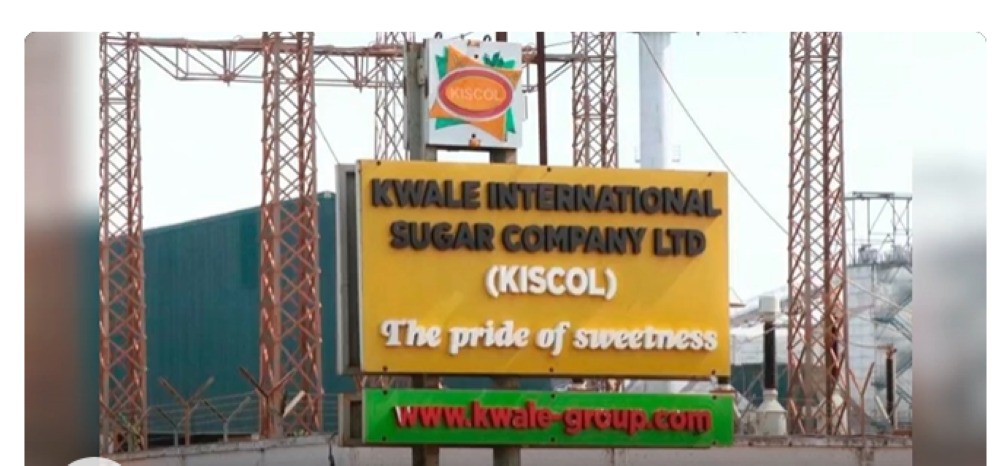
And the government is increasingly treating Kwale International Sugar Company Limited (KISCOL) as more than a troubled miller.
It is beginning to look like a strategic industrial investment worth saving.
That shift became clearer in late July, when Agriculture Cabinet Secretary Mutahi Kagwe unveiled a government plan to revive KISCOL and the wider coastal sugar industry.
The problems, officials acknowledged, go beyond the factory gates.
They include land disputes, inadequate cane supplies, vandalism, insecurity and challenges affecting farmers.
That matters because a sugar mill is only as strong as the ecosystem around it.
Government Moves
The government’s most encouraging step is its decision to take a more active role in coordinating KISCOL’s revival.
A committee has been formed to help tackle the obstacles surrounding the miller, particularly the long-running land question.
The move comes after a major legal breakthrough.
The High Court awarded KISCOL about KSh24 billion after finding that the government had breached obligations connected to the company’s leased land.
The dispute had significantly affected the company’s ability to access and use parts of its estate.
But a court victory alone cannot revive a sugar industry.
The real test is what happens afterwards.
And that is where the latest developments become particularly important.
Reports indicate that KISCOL has begun large-scale cane replanting after regaining access to parts of its nucleus estate.
For farmers, this is more than agricultural activity.
It is a signal.
It says the factory may once again have a future.
Cane Returns
KISCOL was built for a much bigger operation than the struggling mill seen in recent years.
Its original model included about 5,500 hectares of cane, a mill designed to crush approximately 3,300 tonnes of cane daily, an 18-megawatt bagasse-fired power plant and sophisticated drip-irrigation infrastructure.
The numbers reveal the scale of the original ambition.
KISCOL’s irrigation system previously produced cane yields of about 84 tonnes per hectare, compared with roughly 57 tonnes on comparable non-irrigated land and about 51 tonnes under rain-fed farming.
The company also worked with more than 1,100 out-growers cultivating thousands of hectares.
That is why replanting matters.
A hectare of cane is not simply a crop.
It creates work for farmers, tractor operators, harvesters, truckers, mechanics, suppliers and traders. When cane moves, money moves with it.
A functioning mill can become the economic heartbeat of an entire community.
Beyond Sugar
There is an even bigger opportunity. KISCOL was never conceived merely to produce bags of sugar.
Its integrated design included electricity generation from bagasse and plans for ethanol production.
The concept was simple but powerful: extract value from virtually every part of the cane.
That vision fits neatly with Kenya’s current push to modernise the sugar industry.
Sugarcane can produce food, fuel and electricity. Its waste can become energy.
Its processing can create industries around a factory and jobs far beyond its gates.
KISCOL already has much of the infrastructure needed for that model.
What it needs now is consistency.
Reliable cane.
Secure land.
Working infrastructure.
Predictable policy.
And a government willing to solve problems before they become crises.
A Delicate Balance
The hardest issue remains land.
Kagwe has urged Kwale County to accelerate efforts to resolve the occupation of parts of land linked to KISCOL. Reports have put the affected population at about 15,000 people.
That cannot be reduced to a simple eviction exercise. Behind every parcel of disputed land is a person, a home, a crop or a livelihood.
Previous eviction attempts have already demonstrated how sensitive the issue can become.
Kenya therefore needs two things at once: land certainty for KISCOL and fairness for affected communities.
The solution must be lawful, transparent and humane.
If that balance is achieved, the opportunity is enormous.
Coastal cane cultivation has reportedly grown from 2,682 hectares three years ago to 4,686 hectares last year. KISCOL has also been reported to have about 1,500 contracted out-growers.
The foundation, therefore, has not disappeared. It is waiting to be rebuilt.
And perhaps that is the most encouraging part of the KISCOL story today.
The factory is still there. The farmers are still there.
The land can produce. The technology exists.
The market exists.
What has been missing is sustained momentum.
Now, for the first time in years, that momentum appears to be returning.
At Ramisi, the cane is coming back.
The machinery is waiting. And across Kwale, people are once again looking towards the factory with something that had become scarce: Hope.
FOLLOW NAIROBI NEWS ON FACEBOOK

If you like our work, you can buy us a soda
Buy us a soda 🥤