
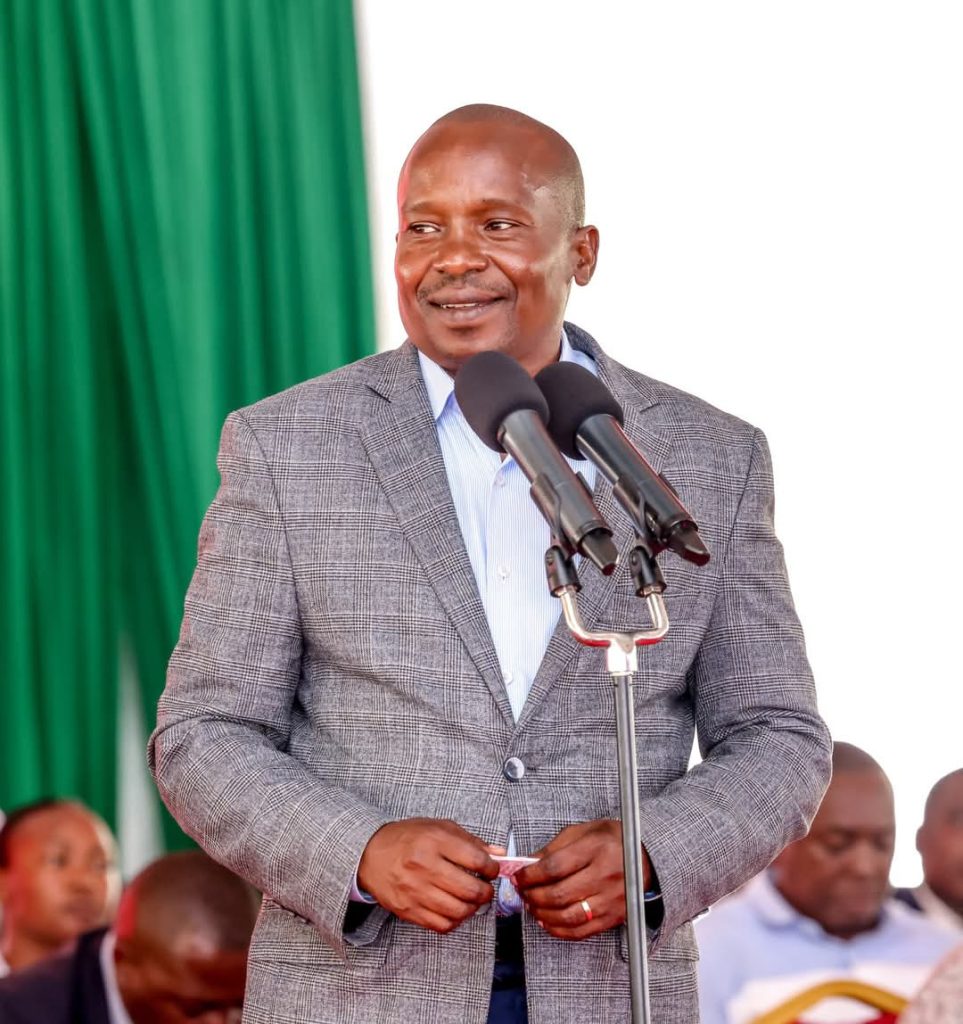
Deputy President Kithure Kindiki has assured Kenyans that the country will never return to political violence, firmly rejecting recent warnings that the 2027 General Election could trigger unrest reminiscent of the 2007-2008 post-election chaos.
Speaking in response to comments by former Deputy President Rigathi Gachagua, Kindiki emphasized that Kenya has moved past its most turbulent political chapter and is now anchored in democratic maturity and peaceful electoral contests.
“Kenya will never return to political violence. Not in 2027, not at any other time in the future,” Kindiki said.
“Our country learnt hard and painful lessons from the 2007/2008 post-election violence. Never again.”
Kindiki, who also serves as Deputy Party Leader of the United Democratic Alliance (UDA), urged leaders to focus on idea-driven campaigns, not fear or threats.
“Kenya’s leadership contests must now revolve around who has better ideas to transform the country.
The debate cannot be about the fear-mongering of desperate, vengeful, thoughtless and pretentious leaders,” he added.
Kindiki’s remarks follow a strong warning from Rigathi Gachagua, who claimed during a May 16 interview on Obinna TV that any attempt to rig the 2027 elections could provoke unrest “worse than 2007–08“, a period that saw more than 1,000 deaths and the displacement of hundreds of thousands.
Gachagua, who recently parted ways with UDA and launched his own political outfit the Democracy for Citizens Party (DCP) downplayed fears of election interference, arguing that electoral reforms had closed off most loopholes.
“Even if President William Ruto appointed his close allies to head the IEBC, the margin of defeat in 2027 would be too large,” Gachagua said.
He also hailed Generation Z as a politically mature and incorruptible force, saying they would reject tribalism, handouts, and the politics of division.
“This generation is ready to vote. They’re not interested in the politics of handouts or ethnic loyalties,” he added.
Gachagua officially launched the DCP on May 15 at its national headquarters in Nairobi. Describing the party as a grassroots movement, he said it would focus on empowering ordinary Kenyans and amplifying their voices.
He also outlined an ambitious party structure, including the National Delegates Convention (NDC), National Governing Council (NGC), National Executive Committee (NEC), and the National Elections Board (NEB), among other organs.
“I will spend the next two years with Kenyans, travelling to every corner of our country, listening to the people,” Gachagua said. “After this, we shall craft our manifesto based on our needs.”
As the country begins to gear up for the 2027 General Election, the stark contrast between Kindiki’s calls for peace and Gachagua’s warnings of unrest reflects the intensifying political rivalry and diverging visions for Kenya’s future.
While Kindiki champions continuity and stability within the Ruto-led administration, Gachagua positions himself as an alternative voice of the people, challenging the establishment and seeking a return to grassroots-driven politics.
Observers say the next two years will be critical in determining the tone of Kenya’s political discourse and whether leaders can uphold the peace that has defined recent elections.
Iran’s Supreme Court Upholds Death Sentence For Pop Singer Tataloo On Blasphemy Charges

If you like our work, you can buy us a soda
Buy us a soda 🥤


