

Kenyan singer Kevin Kioko, popularly known as Bahati, has appealed to the government and Kenyans to intervene after a new song featuring fellow artiste Mr Seed was allegedly removed from YouTube.
Bahati, who expressed his frustration on social media, accused music distributor Mziiki of allegedly causing the removal of the song, claiming that the move had negatively affected Mr Seed and the Kenyan music industry.
The singer called on the government to investigate the matter and consider taking action against the distributor if the allegations are established.
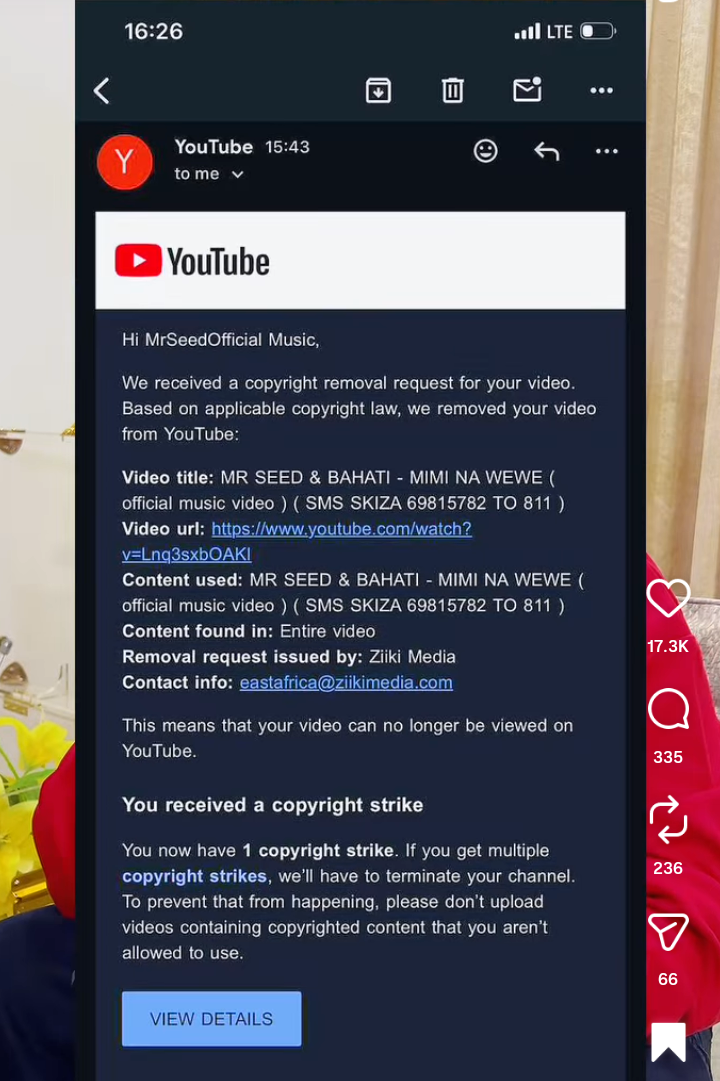
“THIS IS OUR CRY 😭 DEAR THE KENYAN GOVERNMENT… IF YOU MEAN WELL TO THE KENYAN MUSIC INDUSTRY CANCEL @MZIIKI DISTRIBUTERS FROM OPERATING IN THE KENYA MARKET 🇰🇪 HOW DO YOU ILLEGALLY & MALICIOUSLY WAKE UP AND DELETE A SONG FROM YOUTUBE WITH NO EXISTING CONTRACT WITH THE ARTIST??? HIII NI HASARA GANI MNAPEA @MRSEEDOFFICIAL ??? 😭 WASANII WETU WAMETESEKA YA KUTOSHA 🥹… SERIKALI MNAFANYA NINI KUHUSU HAWA WAKORA ???” Bahati said.
Bahati raises alarm over alleged loss
According to Bahati, the biggest concern is the financial and promotional impact that the removal could have on Mr Seed, particularly at a time when digital platforms have become a major avenue through which Kenyan musicians reach audiences and generate income.
The singer questioned how a distributor could allegedly cause a song to disappear from YouTube without what he described as an existing agreement with the artiste.
His comments have reignited debate about the relationship between Kenyan musicians and digital music distributors, particularly concerning ownership, licensing, contracts, copyright claims and control over artists’ digital catalogues.
Music distribution companies play an important role in helping artistes place their songs on streaming platforms and digital stores.
Industry sources note that distribution agreements can involve licensing and rights arrangements, making contractual terms an important part of resolving disputes over music uploaded online.
Bahati and Mr Seed have a long musical history
The latest controversy also comes against the backdrop of a long musical relationship between Bahati and Mr Seed.
Mr Seed, whose real name is Moses Tarus Omondi, previously worked under Bahati’s EMB Records before leaving the label in 2019 to pursue an independent career.
At the time, Mr Seed said he wanted to go independent while creating opportunities for other upcoming artistes.
The two musicians have nevertheless continued to collaborate over the years.
Their musical history includes Wangu, a collaboration credited to Bahati featuring Mr Seed and included on Bahati’s Barua Za Bahati album.
The latest project therefore attracted attention not only because of the reported YouTube removal but also because of the renewed musical link between the two artistes.
This is not Bahati’s first dispute over music distribution
Bahati has previously found himself embroiled in a public dispute involving a music distribution company and the removal of music from YouTube.
In 2023, he accused Ziiki Media of interfering with the distribution of his music after a collaboration with Rwandan artiste Bruce Melodie was removed from YouTube.
The company denied Bahati’s allegations and said the singer’s claims were unsupported. Ziiki Media also stated that it had distributed Bahati’s music under legally binding agreements dating back to 2020.
That dispute demonstrated how complicated disagreements between artistes, distributors and digital platforms can become, especially when questions surrounding contracts and copyright arise.
Bahati also experienced another YouTube-related controversy in 2023 when his song Huyu was removed following a copyright complaint by Tanzanian producer Genius Jini X66.
The producer alleged that the song had sampled elements of his work without permission, while Bahati described the removal as malicious.
The earlier incidents have added context to Bahati’s latest outcry, although the circumstances surrounding the current Mr Seed song remain separate and would need to be independently established.
Digital platforms increasingly important to Kenyan artistes
The dispute comes at a time when streaming and digital distribution have become central to the Kenyan music industry.
For many artistes, releasing a song is no longer limited to radio and physical sales.
Music can simultaneously reach listeners through YouTube and other streaming services, with digital distribution companies helping artistes deliver their content to different platforms.
A recent overview of music distribution in Kenya noted that the distributor effectively becomes an important part of the release process because it determines how music is routed to streaming platforms and international digital stores.
This makes disputes over the removal of songs particularly significant because a takedown can potentially interrupt an artiste’s promotional campaign and digital momentum.
Bahati wants government intervention
Bahati’s latest message went beyond appealing to the distributor and YouTube.
He directly challenged the Kenyan government to protect local musicians and ensure that artistes are not disadvantaged in disputes involving digital music companies.
The singer questioned what he described as the mistreatment of Kenyan musicians, ending his message with an emotional appeal to authorities to act.
“WASANII WETU WAMETESEKA YA KUTOSHA… SERIKALI MNAFANYA NINI KUHUSU HAWA WAKORA???” Bahati stated.
His comments are likely to fuel a wider conversation about whether Kenyan musicians have adequate protection when dealing with international or locally operating distribution companies and whether contracts clearly spell out what happens when disagreements arise.
Questions remain over the song’s removal
While Bahati has publicly accused Mziiki of being responsible for the song’s removal, his claims represent his side of the dispute.
As of the time of publication, there was no independent confirmation available establishing the precise reason the Mr Seed collaboration was removed, nor was there a public response from Mziiki addressing Bahati’s latest allegations.
The exact contractual relationship between the artiste, the distributor and the YouTube upload will therefore be central to determining what happened.
For now, Bahati’s intervention has placed the issue firmly in the spotlight, with the singer calling on authorities and Kenyans to stand with local musicians as the country’s music industry increasingly depends on digital platforms for distribution, visibility and revenue.
FOLLOW NAIROBI NEWS ON FACEBOOK

If you like our work, you can buy us a soda
Buy us a soda 🥤