
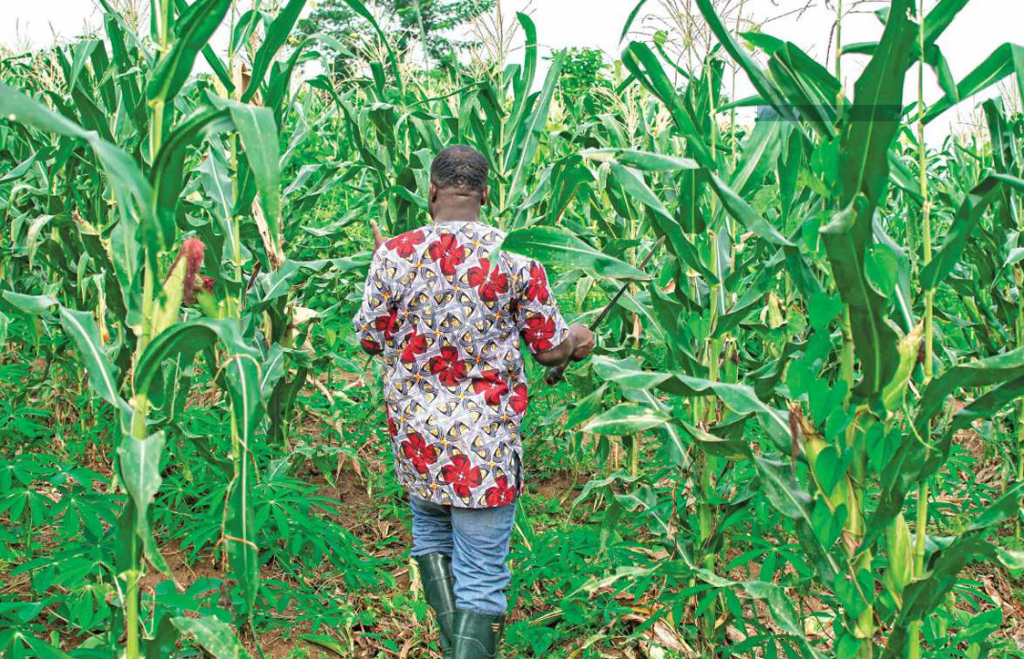
Kenya’s agriculture sector showed marked improvement in 2024, driven by increased crop yields, higher livestock production, and sustained government support.
According to the Economic Survey 2025, the sector’s Value Added at constant prices rose from Sh 1,634.1 billion in 2023 to Sh 1,706.0 billion in 2024.
The positive performance came despite mixed weather conditions, with the March–May long rains being above average, while the October–December short rains were erratic and poorly distributed, negatively affecting some crops.
Crop and Livestock Production Highlights
- Maize production declined by 6.1%, dropping to 44.7 million bags, a shortfall attributed to inconsistent short rains.
- Tea production benefited from good rainfall in key growing regions, increasing 4.2% to 2,687.2 thousand tonnes.
- Sugarcane production recorded the most dramatic growth, rising 68.7% to 9.4 million tonnes.
- Coffee production also improved modestly by 1.6% to 49.5 thousand tonnes.
- Milk production rose 1.0% to 5.33 billion litres, while the volume of marketed milk surged by 12.0% to 908.4 million litres.
- Horticultural exports declined by 14.1%, totaling 402.2 thousand tonnes, and earnings from horticulture dropped 12.8% to KSh 136.6 billion.
Meanwhile, livestock slaughter numbers increased across all categories, with: Camels recording the highest rise at 29.9%, Cattle and calves up by 17.9%, Sheep and goats up 8.0%, Pigs up 7.9%
Notably, no donkeys were slaughtered in 2024 following the government’s continued enforcement of a ban.
Total earnings from marketed agricultural production grew by 7.2%, reaching KSh 690.0 billion. Honey and beeswax production saw significant increases of 13.5% and 25.8%, respectively.
Indicators of food security also improved: Per capita caloric supply rose to 2,153.7 kcal/day, Self-Sufficiency Ratio (SSR) increased to 105.5%, showing Kenya produced more than its domestic food needs, Import Dependency Ratio (IDR) dropped to 17.3%, reflecting reduced reliance on food imports
Enrolment in agricultural degree programs climbed to 23,500 students in 2024, a sign of growing interest in the sector and its long-term importance to the economy.
The data signals a strong rebound for Kenya’s agriculture sector, underscoring the effectiveness of policy support and resilience of farmers amid climatic challenges.
Win For DPP As Court Declines Waititu Fresh Bail Application.

If you like our work, you can buy us a soda
Buy us a soda 🥤