
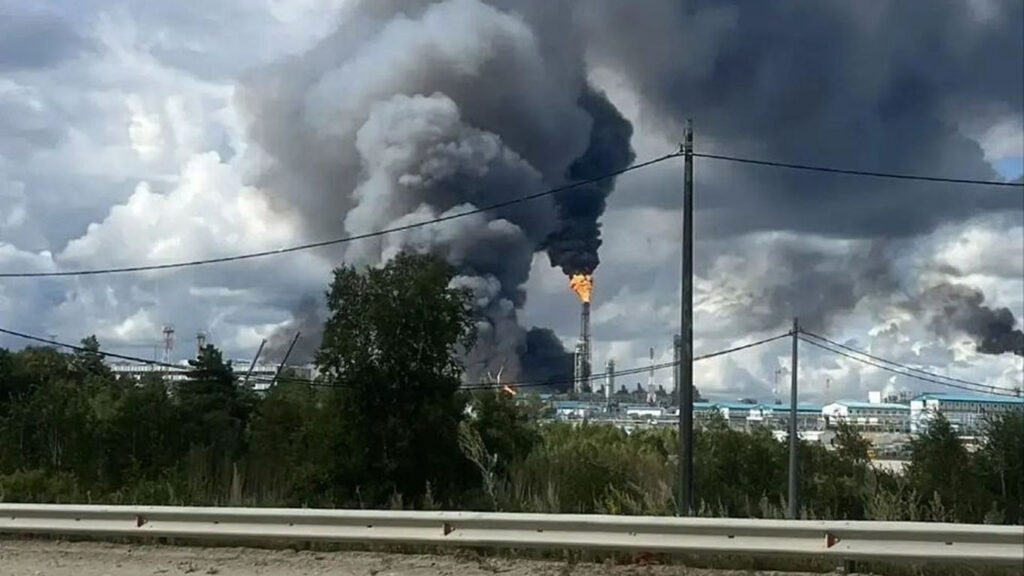
A deadly industrial disaster has struck one of Russia’s most ambitious energy projects after a major fire and explosion erupted at the Amur Gas Chemical Complex in the country’s Far East, killing seven people, injuring more than 150 and leaving nine Chinese workers unaccounted for.
The incident occurred on Tuesday, August 25, at the sprawling facility in Russia’s Amur region, near the Chinese border.
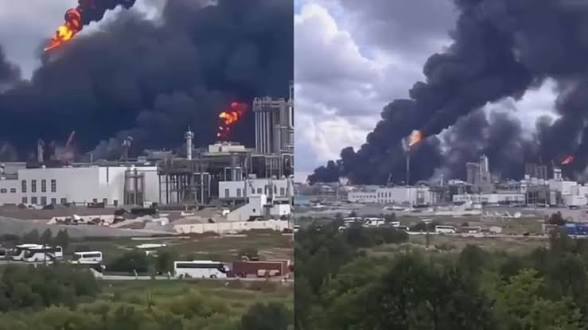
Dramatic footage from the scene showed enormous flames engulfing parts of the industrial complex as thick, dark smoke billowed into the sky.
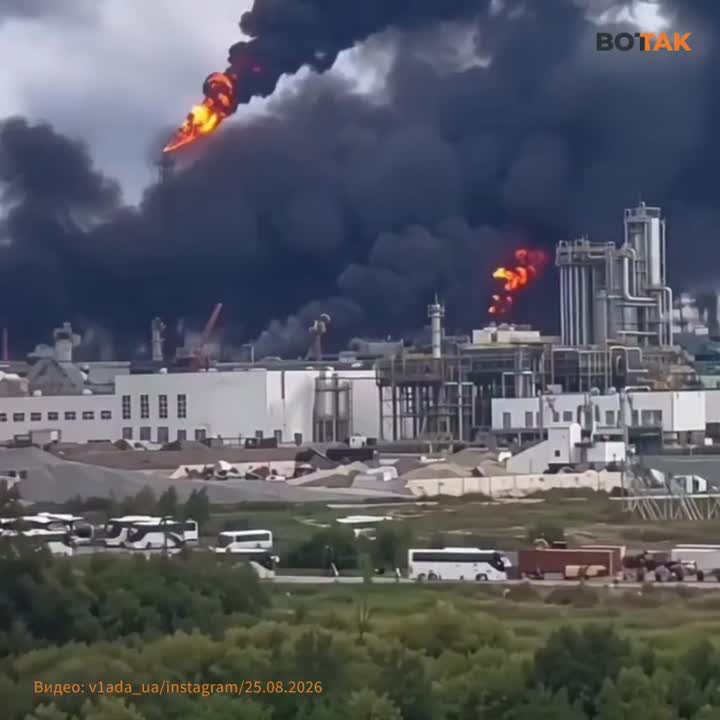
According to the latest information released by the company, seven people have been confirmed dead. Six of the victims were Chinese nationals, while the seventh was a Russian citizen. Nine additional Chinese workers employed by a contractor remain missing as rescue teams continue searching the site.
The scale of the casualties grew rapidly as emergency crews assessed the damage.
A total of 152 people sought medical attention following the incident, with 36 requiring hospitalisation for injuries of varying severity.
Russia also dispatched a special emergency-services aircraft to assist with transporting injured workers to medical facilities.
Fire breaks out at major construction project
The Amur Gas Chemical Complex is not an ordinary industrial facility.
The roughly $10 billion project is a major Russia-China venture involving Russian petrochemical giant SIBUR and China’s state-owned Sinopec.
The facility is being developed near the town of Svobodny and is designed to become one of the world’s largest producers of polyethylene and polypropylene, materials widely used in packaging, construction, consumer goods and other industries.
The project covers approximately 325 hectares and was approaching the commissioning and production stage when disaster struck.
Preliminary information from the company indicates that the fire began in an auxiliary process section of the complex’s pyrolysis unit.
Officials said the facility’s primary equipment was not damaged, although investigators are still working to establish exactly what triggered the blaze.
The fire was eventually extinguished, while specialists continued dealing with residual industrial gases at the site.
Nine Chinese workers remain missing
The tragedy has raised particular concern over the fate of nine Chinese nationals who were working for a contractor at the complex.
Search-and-rescue teams have continued operations as authorities attempt to establish whether the missing workers are trapped inside damaged sections of the facility or were evacuated during the chaos.
The discovery of additional victims during rescue operations pushed the confirmed death toll to seven, highlighting the difficulty emergency teams faced while searching the vast industrial site.
Authorities have also been monitoring air quality around the nearby residential area of Svobodny. Preliminary monitoring has not detected concentrations of controlled substances above permissible limits, according to the company.
Russia launches investigation into possible safety violations
The deadly incident has triggered an official investigation, with Russia’s Investigative Committee examining whether industrial safety requirements were violated.
A criminal case has reportedly been opened over potential breaches of safety rules at a hazardous industrial facility.
Investigators are expected to examine equipment, construction procedures, workplace safety protocols and the circumstances surrounding the fire.
The investigation could prove significant because the facility was still undergoing construction and pre-commissioning activities rather than full-scale commercial production.
A crucial Russia-China industrial partnership
Beyond the immediate human tragedy, the disaster has also drawn attention to the strategic importance of the Amur project.
SIBUR owns a 60% stake in the venture, while Sinopec holds 40%. The complex is designed to receive raw materials from the nearby Amur Gas Processing Plant and convert them into valuable petrochemical products.
Once fully operational, the facility is expected to have the capacity to produce approximately 2.3 million tonnes of polyethylene and 400,000 tonnes of polypropylene annually.
The project was therefore intended to strengthen Russia’s petrochemical industry while deepening industrial cooperation with China.
Construction has already taken years. Training for engineers began as early as 2016, while the complex entered the commissioning stage in 2024.
The original completion schedule had been pushed back to 2026 following changes involving equipment, technology licensors and suppliers.
Focus now turns to the missing workers
As firefighters and emergency teams bring the disaster under control, attention is shifting to the nine missing workers and the families waiting for answers.
The cause of the fire remains under investigation, and officials have yet to establish whether it was caused by an equipment failure, an operational error or another factor.
For now, the Amur disaster represents a devastating setback for a flagship industrial project that was expected to play a major role in Russia’s petrochemical ambitions and its economic partnership with China.
The immediate priority, however, remains the search for the missing workers, treatment of those injured and determining how the deadly incident unfolded inside the multibillion-dollar complex.
FOLLOW NAIROBI NEWS ON FACEBOOK

If you like our work, you can buy us a soda
Buy us a soda 🥤